
Views: 0 Author: Site Editor Publish Time: 2026-08-29 Origin: Site


The electronics manufacturing landscape offers a variety of methods for producing metal parts. Stamping, die casting, metal injection molding, and CNC machining all have their place, each with distinct advantages and limitations. Yet when it comes to the components that truly define product performance—those requiring tight tolerances, complex geometries, superior surface finishes, and rapid adaptability—a growing number of electronics manufacturers are making the same choice: CNC machining.
This preference is not accidental. It reflects a clear-eyed assessment of what matters most in today's competitive electronics environment. Speed to market, design flexibility, quality consistency, and total cost of ownership all point toward CNC as the preferred solution for critical metal components.
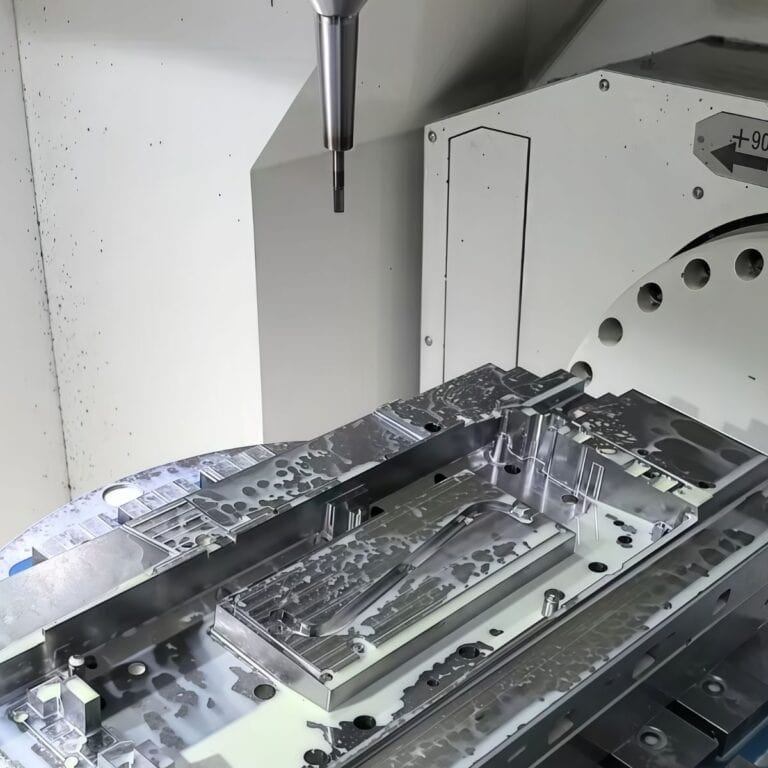
Consider the question of design iteration. In the early stages of product development, specifications are fluid. Testing reveals unexpected behaviors. Market feedback prompts adjustments. Component dimensions shift accordingly. With traditional tooling-based processes such as die casting or stamping, each design change requires costly and time-consuming tool modifications. New tools must be designed, fabricated, and validated, often adding weeks or months to the development cycle. CNC machining sidesteps this constraint entirely. Because the process is software-driven, design changes are implemented by updating the digital model and regenerating tool paths. The same machine that produced your first prototype can produce your revised version within hours, with no new tooling costs and no extended delays. This agility is invaluable in an industry where being first to market can determine commercial success.
Surface quality presents another point of differentiation. Electronics components often demand specific surface characteristics for reasons that go beyond aesthetics. A heat sink requires a flat, smooth interface to minimize thermal resistance. A shielding enclosure needs clean edges to prevent unwanted signal leakage. A connector component demands a burr-free surface to ensure reliable electrical contact. CNC machining delivers these outcomes natively. The cutting process produces surfaces with controlled roughness, sharp corners, and precise edge breaks, all achieved through careful tool selection and path planning. Secondary finishing operations such as bead blasting, brushing, or anodizing then enhance these surfaces to meet the exacting requirements of electronic applications. Stamped or cast parts, by contrast, often require extensive secondary operations to achieve comparable surface quality, adding cost and complexity.
Material selection offers further evidence of CNC's versatility. Electronics manufacturers work with a diverse palette of metals, each chosen for specific properties. Aluminum for lightweight thermal management. Copper for high electrical conductivity. Stainless steel for corrosion resistance and strength. Brass for machinability and aesthetic appeal. CNC machining accommodates this entire spectrum with equal proficiency. The same equipment, with appropriate tooling and parameters, can process everything from soft aluminum to tough stainless alloys to conductive copper. This flexibility means you can select the optimal material for each component without worrying whether your manufacturing partner can handle it. Tooling-based processes are far more restrictive, often optimized for a specific material family and uneconomical to convert for others.
Tolerance capability is perhaps the most compelling argument for CNC. Electronic assemblies are becoming increasingly compact, with components packed ever more tightly into limited volumes. Clearance between adjacent parts shrinks, alignment requirements tighten, and the margin for error narrows. CNC machining consistently achieves tolerances measured in microns, enabling the precise fits that modern product designs demand. This accuracy is repeatable across entire production runs, ensuring that every part, whether the first or the thousandth, meets the same exacting standard. Cast or stamped parts rarely achieve this level of precision without costly post-processing, and even then, the consistency may vary due to process variables inherent in those methods.
Production volume flexibility is another strategic advantage. Electronics product lifecycles can be unpredictable. A new device may launch with modest initial demand, grow rapidly, plateau, and eventually decline. CNC machining scales gracefully across this entire curve. In low volumes, it is cost-effective because there is no tooling investment to amortize. In medium volumes, it remains competitive due to its efficiency and consistency. In high volumes, it continues to deliver, with optimized processes and automated handling systems. Other manufacturing methods are typically viable only within a narrower volume band, requiring manufacturers to invest in alternative processes or accept uneconomical costs when volumes change.
Lead time compression is a constant pressure in electronics. Consumers expect new products quickly, and supply chains must respond. CNC machining excels in this dimension. Setup times are short. Programming is efficient. Production can begin as soon as the digital model is ready and material is in hand. There is no waiting for tool fabrication, no delays for die tryouts, no dependency on long-lead tooling suppliers. This responsiveness enables manufacturers to accelerate their development schedules and respond rapidly to market opportunities.
Quality assurance is woven into the CNC process in ways that other methods cannot match. In-process monitoring systems check dimensions continuously, detecting any deviation before it affects the finished part. Post-process inspection confirms that every critical feature meets specifications. The digital nature of CNC also provides complete traceability: every tool path, every parameter, every measurement is recorded and can be reviewed. This transparency is particularly valuable in regulated industries such as medical electronics or automotive, where documentation and verification are mandatory.
Cost considerations ultimately influence every manufacturing decision, and here CNC machining offers a compelling total-cost proposition. While per-part costs may be slightly higher than high-volume stamping or casting for very large runs, the absence of tooling costs, the elimination of secondary operations, the reduction of scrap, and the avoidance of inventory carrying costs often produce a lower total cost when all factors are considered. For products with evolving designs or uncertain volumes, the cost advantage of CNC becomes even more pronounced.
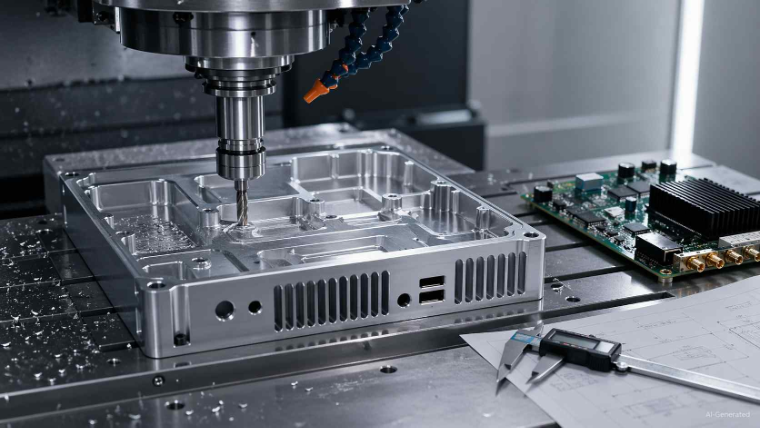
Our facility is purpose-built to serve the electronics industry's specific needs. We understand the materials, the tolerances, the finishes, and the documentation requirements that electronic components demand. Our machining centers are maintained to the highest standards, our inspection equipment is calibrated and certified, and our team is trained in the unique challenges of electronic part production.
We also recognize that process selection is not binary. Many of our clients combine manufacturing methods, using CNC for critical precision components while sourcing simpler parts through other processes. We support this hybrid approach, coordinating with your broader supply chain to ensure seamless integration. Our role is to provide the capabilities that complement and enhance your overall manufacturing strategy.
Ultimately, the choice of manufacturing method is a strategic decision that affects product performance, development speed, and commercial success. By choosing CNC machining for your critical metal components, you gain control over your design, your quality, and your timeline. You eliminate dependencies on expensive tooling. You maintain the freedom to iterate and improve. You deliver products that meet the high expectations of today's discerning electronics markets.
We invite you to evaluate CNC machining for your next electronic project. Upload your drawing or send us your sample, and let us demonstrate the precision, flexibility, and reliability that have made CNC the preferred choice of leading electronics manufacturers worldwide.



 English
 简体中文
简体中文