
Views: 0 Author: Site Editor Publish Time: 2026-11-20 Origin: Site


If you have been sourcing sheet metal parts for data center or server applications, you have probably noticed a quiet but dramatic shift in the drawings landing on your desk. The tolerances are tighter. The hole patterns are denser. The material specs now come with thermal and EMI requirements attached. Something fundamental has changed.
The culprit—or rather, the opportunity—is AI infrastructure. As hyperscale computing pushes rack power densities beyond what conventional designs were ever meant to handle, sheet metal enclosures have evolved from passive housings into functional components that directly affect signal integrity, thermal performance, and structural reliability. For buyers and engineers sourcing custom fabrication, understanding this shift is no longer optional.
The global sheet metal fabrication services market was valued at approximately$18.5 billion in 2025**and is projected to reach**$29.95 billion by 2034, growing at a CAGR of5.5%. Asia-Pacific dominates production with roughly 45% market share, while North America is the fastest-growing region at 6.2% CAGR, driven largely by reshoring initiatives and defense-related demand.
But the headline growth figures obscure a more interesting story about where the demand is coming from. According to industry analysis presented at manufacturing trade events this year, AI-related downstream applications have become a dominant driver of new orders for precision sheet metal work. The specific components in demand are telling: liquid cooling cold plates, quick-disconnect manifolds, CPO switch enclosures, and high-density rack structures.
The technical requirements for these parts are a different league from traditional server chassis. Industry data cited at the 2026 ITES exhibition indicates that next-generation AI racks are approaching1MW per cabinet, compared to a few hundred kilowatts for conventional high-density deployments. At those power levels, every aspect of the enclosure—from airflow paths to grounding continuity—becomes a performance-critical variable.

If you are sourcing sheet metal for AI-adjacent applications, here are the practical changes you should expect to see in specifications:
Tolerances are tightening to micron-level. CPO (co-packaged optics) switch housings and precision backplanes require “zero thermal impact” and micron-level accuracy to preserve optical signal integrity. Traditional sheet metal tolerances measured in fractions of a millimeter are insufficient here.
Hole density is exploding. Higher-power components demand more cooling apertures, mounting points, and cable pass-throughs per square inch. This increases laser cutting time and places a premium on nesting efficiency and cut quality—burrs or dross that were acceptable on a standard enclosure can become functional defects on a thermal-critical part.
Surface finish matters for more than aesthetics. EMI shielding effectiveness, thermal contact resistance, and corrosion resistance all depend on consistent surface treatment. Powder coating thickness variation that would pass visual inspection may fail functional requirements in high-frequency or liquid-cooled environments.
Material traceability is non-negotiable. With Section 232 tariffs on steel and aluminum adding cost and compliance complexity, and with AI hardware programs demanding full supply chain documentation, a fabricator that cannot provide mill certificates and origin documentation is a liability, not a partner.
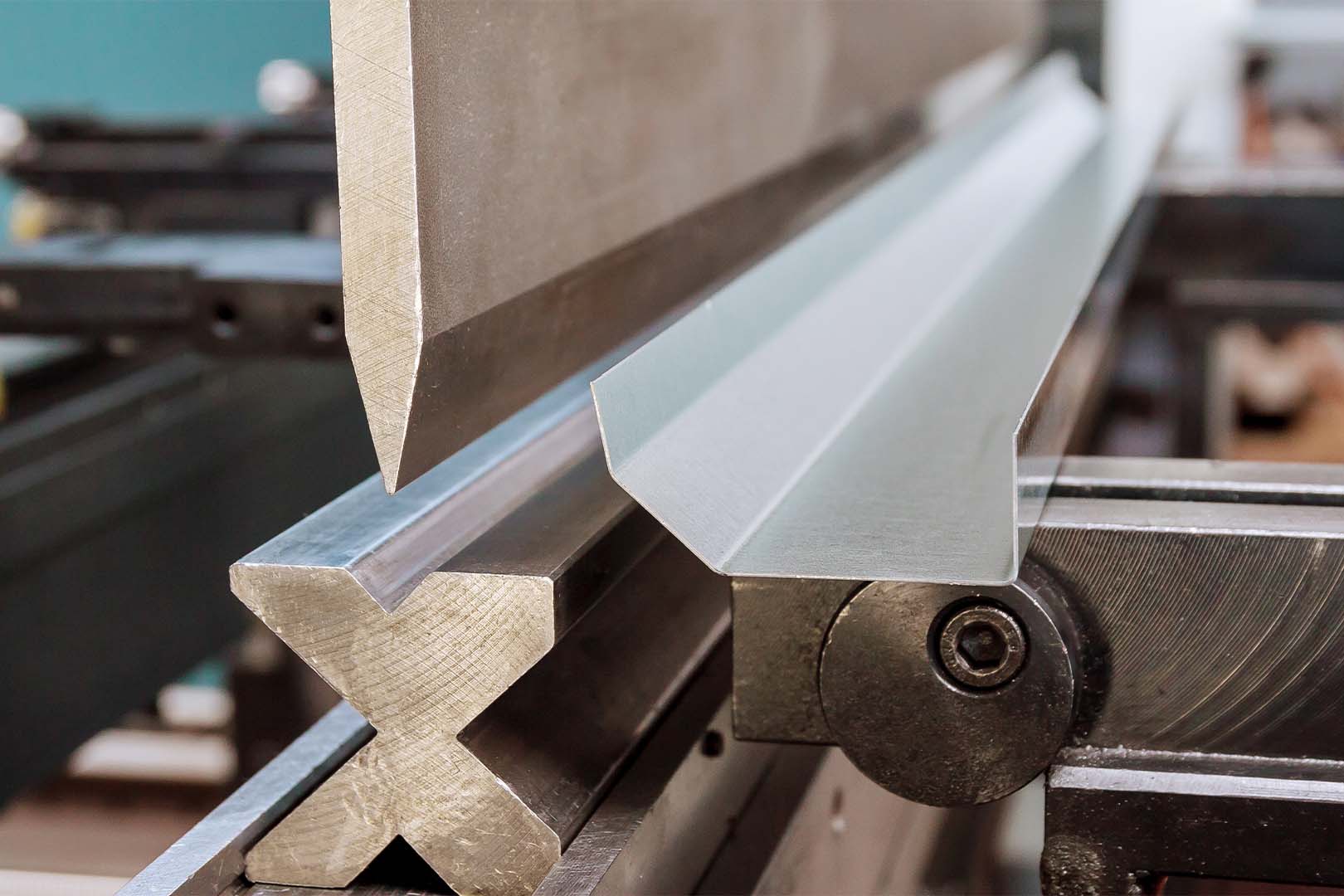
The shops best positioned to serve AI infrastructure customers have invested in specific capabilities that go beyond general sheet metal work.
At the 2026 ITES exhibition in Shenzhen, the equipment trend was unmistakable: laser cutting systems with micron-level precision, composite punch-laser machines that reduce handling between operations, and automated bending and welding cells integrated with MES systems for production tracking. The message from equipment makers was consistent—they are not selling individual machines anymore; they are selling throughput and yield for high-mix, high-precision production.
For buyers, this translates into a practical checklist. A fabricator claiming capability in AI infrastructure sheet metal should be able to demonstrate:
Fiber laser cutting with micro-level accuracy, preferably on a thermally stable platform (granite bed machines are becoming a differentiator for precision work)
In-house bending and welding, not just cutting, because fit-up tolerance across a multi-part assembly depends on controlled processes under one roof
Documented inspection protocols, including first-article inspection and in-process probing where applicable
Material certification and traceability from mill to finished part
The AI hardware boom has created a seller’s market for capable fabricators. Lead times are stretching, and some shops are prioritizing larger, repeat orders over one-off custom work. That makes due diligence more important, not less.
When evaluating a sheet metal partner for AI-adjacent projects, ask these questions:
“Have you produced parts for liquid cooling or high-density compute applications?” The learning curve is real. A shop that has already navigated the thermal and tolerance challenges of cold plates or manifold assemblies will understand your drawing’s intent, not just its dimensions.
“Can you show me a first-article inspection report from a comparable part?” Not a generic ISO certificate. A specific FAI from a part with similar complexity. The document should show dimensional results, material cert references, and any deviations with disposition.
“What is your process for handling design changes?” AI hardware platforms are evolving rapidly. A fabricator that treats every revision as a new quote and a new lead time will slow you down. The best partners have a defined change-management workflow that distinguishes between minor revisions and full re-qualification.
“How do you handle tariff and origin documentation?” If your product ships into markets affected by Section 232 or similar measures, the fabricator’s documentation practices directly affect your landed cost and compliance risk.

The AI infrastructure buildout is not a temporary spike. It represents a structural shift in what sheet metal fabrication is expected to deliver—from millimeter-level enclosures to micron-level functional components. The fabricators who have invested in precision cutting, integrated bending and welding, and rigorous documentation are positioned to capture this demand. The ones who have not will struggle to meet specifications that did not exist five years ago.
If you are sourcing sheet metal for compute, cooling, or power infrastructure this year, treat your fabricator selection as an engineering decision, not just a purchasing transaction. The right partner will flag manufacturability risks before you cut metal, provide documentation that satisfies your compliance team, and deliver parts that perform—not just fit.



 English
 简体中文