
Views: 0 Author: Site Editor Publish Time: 2026-01-19 Origin: Site


Within the aluminum chassis of a smartphone, the precise acoustic chambers of wireless earbuds, and the minuscule structural components of a smartwatch, a war is being waged at the millimeter scale. The consumer electronics industry's relentless pursuit of extreme thinness, seamless integration, and aesthetic precision has elevated CNC machining from a traditional manufacturing process to the pinnacle of technology and art. This is not merely a change in production methods; it is the microscopic engineering that defines a product's very soul.
1. The Material Revolution: Precision Evolution from Aluminum to Special Alloys
Aerospace-Grade Aluminum Alloys (6063/7075): Moving beyond standard aluminum, flagship devices now widely use aviation-grade 7-series alloys. While hardness increases by 40%, machinability plummets, reducing tool life to about 60% of standard materials.
Surgical-Grade Stainless Steel (316L): Used in high-end watch cases and camera bezels, it is prone to built-up edge and work hardening during machining, requiring specialized coolants and exceptionally sharp tools.
The Titanium Revival: With the rise of foldable screen hinges and premium wearables, TC4 titanium alloy is prized for its high strength, low density, and skin-friendliness. However, with thermal conductivity only one-sixth that of steel, it demands special cooling strategies.
Precision Machining of Composites: Processing materials like Carbon Fiber Reinforced Polymer (CFRP) and ceramic-metal composites requires dedicated diamond-coated tools and stringent dust control.
2. The Precision Dimension: A Manufacturing Revolution from Macro to Micro
Sub-Micron Positioning Accuracy: Modern electronics CNC requires repeatable positioning accuracy of ±0.002mm—about 1/25th the diameter of a human hair.
Nano-Scale Surface Finish: High-end products demand surface roughness of Ra < 0.1μm, necessitating special polishing processes and high-precision spindles (often exceeding 30,000 RPM).
Extreme Control of Geometric Tolerances: Form tolerances like flatness, perpendicularity, and concentricity are commonly held to < 0.01mm, with some optical components requiring < 0.005mm.
3. Structural Complexity: The Leap from Simple Parts to Miniature Engineering
Micro-Feature Machining: Speaker grilles and mesh holes can be as small as 0.3mm in diameter, requiring micro-tools down to 0.2mm.
Thin-Wall Stability: Smartphone chassis walls can be as thin as 0.4mm, presenting challenges of vibration, deformation, and stress concentration during machining.
Integrated Complex Surfaces: The metal frames for 2.5D and 3D curved glass require 5-axis simultaneous machining to maintain precise and consistent gaps (typically 0.1-0.2mm).

1. Aesthetic Structural Components: The Product's "First Calling Card"
Metal Mid-Frames/Back Covers: Utilizing "diamond cutting" processes to create gleaming chamfered edges with angular tolerances of ±0.5°.
Unibody Designs: Carved from a single block of aluminum, they reduce seams for enhanced structural integrity and water resistance.
The Foundation for Surface Treatment: The CNC-machined texture provides the perfect substrate for subsequent anodizing, sandblasting, and PVD coating.
2. Internal Structures & Connection Systems: The Unseen Precision Engineering
Internal Brackets & Reinforcement Ribs: Made from magnesium alloy or thin steel, they undergo precision stamping followed by secondary CNC machining, weighing just 0.5-2 grams.
Trays & SIM Card Slots: Require tight fit tolerances (±0.02mm) and durability for repeated insertion/removal cycles.
Button & Port Components: Metal surrounds for power/volume buttons and metal housings for ports like USB-C.
3. Acoustic & Optical Components: Balancing Function and Form
Speaker Enclosures & Sound Ports: CNC-machined ports allow precise control over sound directivity and frequency response.
Microphone Acoustic Structures: Precisely machined acoustic channels and dust filters balance sound transmission with protection.
Lens Decorative Rings: Stainless steel or aluminum rings requiring exceptional roundness and surface finish.
4. Wearable Devices: The Ultimate Challenge in Miniaturization
Smartwatch Cases: Miniature, complex structures integrating lugs, button holes, and sensor openings.
TWS Earbud Charging Cases: Precise hinge mechanisms and magnet slots demanding tight fit tolerances.
AR/VR Device Structures: Must simultaneously meet demands for lightweight design, structural strength, and complex curvature.
The Evolution of Machining Centers
Democratization of High-Speed, High-Precision Models: Machines with linear motor drives and acceleration over 2G are becoming standard.
Normalization of Multi-Axis Machining: 3+2 axis positional machining is widespread, with true 5-axis simultaneous machining seeing increased use in high-end structural parts.
Trend Towards Hybrid Machining: Turn-mill and mill-grind composite processes reduce setups and improve accuracy for complex parts.
Breakthroughs in Tooling Technology
Micro-Tooling Systems: Micro end mills and drills with diameters from 0.1mm to 1mm are now standard Configuration.
Development of Specialized Coatings: Coatings like AlTiN and DLC are optimized for the different materials used in electronics.
Application of Smart Tool Holders: Holders with vibration monitoring and thermal compensation are beginning to be used in high-precision operations.
Intelligent Quality Control
Integrated In-Process Measurement: On-machine laser scanners and touch probes enable real-time compensation during machining.
Automated Visual Inspection: AI vision systems automatically detect surface defects, replacing manual visual checks.
Data Traceability Systems: Full-process data traceability from raw material to finished part meets the quality demands of premium brands.
Cost Structure Analysis
High-End Smartphone Metal Parts: CNC machining can account for 15-25% of the Bill of Materials (BOM) cost.
Laptop Enclosures: CNC cost share is 8-15%, varying with complexity.
Wearable Device Housings: CNC can represent 20-35% of cost due to increased difficulty from miniaturization.
Industry Geographic Distribution
Pearl River Delta Cluster (Shenzhen, Dongguan): The global epicenter for consumer electronics CNC, focused on phones, earphones, etc.
Yangtze River Delta Cluster (Suzhou, Kunshan): A major production base for laptops and smart wearables.
Chengdu-Chongqing Region: An emerging electronics manufacturing hub in Western China,Acceptance industry transfer.
Technology Spillover Effects
Elevated Precision Manufacturing Capability: Electronics demand has driven the overall advancement of China's precision manufacturing level.
Equipment Industry Development: Spurred technological progress in domestic high-speed machining centers, precision tooling, and metrology equipment.
Process Standardization: Established a series of industry standards and process specifications for electronics precision machining.
Materials Frontier
Liquid Metal Applications: Precision machining techniques for zirconium-based bulk metallic glasses are still being breakthrough.
Ceramic Material Adoption: Machining zirconia ceramics requires dedicated equipment and processes.
Machining Renewable Materials: Research into the machining characteristics and surface treatment of bio-based materials.
Process Convergence
3D Printing + CNC Hybrid Manufacturing: Efficient solutions for complex, organic-shaped structural parts.
Micro/Nano-Machining Technology Fusion: Combining traditional CNC with laser micro-machining, electrochemical machining, etc.
Intelligent Process Chains: Full-flow intelligent machining systems based on digital twins.
Sustainable Development
Green Machining Technologies: Wider adoption of eco-friendly processes like Minimum Quantity Lubrication (MQL) and dry machining.
Improved Material Utilization: Reducing waste through topological optimization and advanced nesting algorithms.
Intelligent Energy Management: Real-time monitoring and optimization of energy consumption during machining.
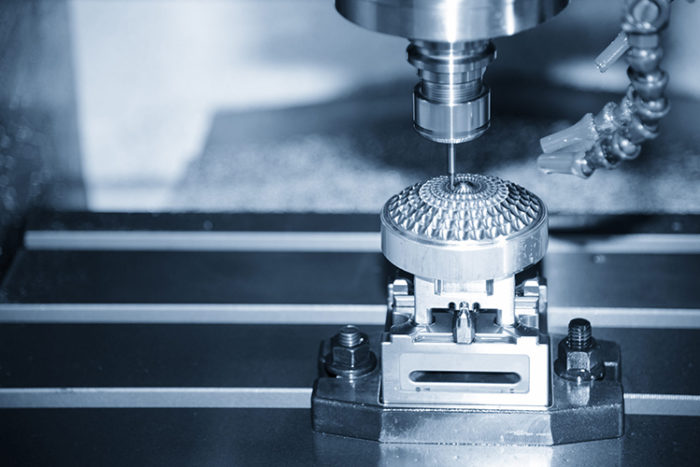
In the consumer electronics realm, where extremes are pursued, CNC machining has evolved from a mere fabrication method into a critical enabler of product innovation. It is no longer just a tool for realizing design but a key factor that constrains or unleashes design possibilities.
The future competition in consumer electronics will, to a large extent, be a competition in precision manufacturing capability. Companies that master cutting-edge CNC technology and can translate designers' boldest visions into reality will gain a distinctive edge in an increasingly fierce market.
In a sense, every refined electronic device in our hands is a miniature monument to precision manufacturing, recording humanity's excellence ability to control the form of matter at a microscopic scale. And CNC technology is the modern "digital sculptor" carving these monuments.






 English
 简体中文
简体中文