
Views: 0 Author: Site Editor Publish Time: 2026-03-02 Origin: Site


As the global manufacturing sector navigates the middle of the decade, the CNC (Computer Numerical Control) machining industry in 2026 is defined by a powerful shift from theoretical "future concepts" to practical, data-driven realities. The focus is no longer solely on raw machine power but on operational resilience, intelligent automation, and the strategic fusion of digital and physical technologies. From job shops to aerospace suppliers, the key themes are adaptation and integration.
The global CNC machine market continues its upward trajectory, fueled by demand for precision components in electric vehicles (EVs), aerospace, and medical devices. According to recent market forecasts, the sector is valued at approximately USD 77-79 billion in 2026, with projections indicating steady growth towards USD 100-115 billion by the early 2030s. This expansion is underpinned by government incentives for factory modernization, reshoring initiatives in North America and Europe, and the relentless demand for tighter tolerances.
However, the path to growth is not without its challenges. Inconsistent demand in sectors like agriculture and heavy trucking, coupled with volatility in material and energy costs, has instilled tighter quoting discipline across the supply chain. Original Equipment Manufacturers (OEMs) and their suppliers are prioritizing cost transparency and value engineering to navigate this complex landscape.
The technological landscape of 2026 is marked by the maturation of several key trends that are now delivering tangible shop-floor benefits.
Artificial Intelligence in CNC machining has shed its experimental label. In 2026, AI is becoming integral to daily operations through practical applications. Rather than fully autonomous factories, the focus is on pragmatic AI that delivers immediate value. Machine tools now leverage real-time sensor data to automatically adjust feeds, speeds, and toolpaths in response to vibration, load, or temperature changes. This leads to more consistent surface quality, reduced tool wear, and fewer unplanned production halts. AI-assisted toolpath agents are also reducing programming workloads, with some reports suggesting a 50% reduction in programming time while improving surface finish repeatability.
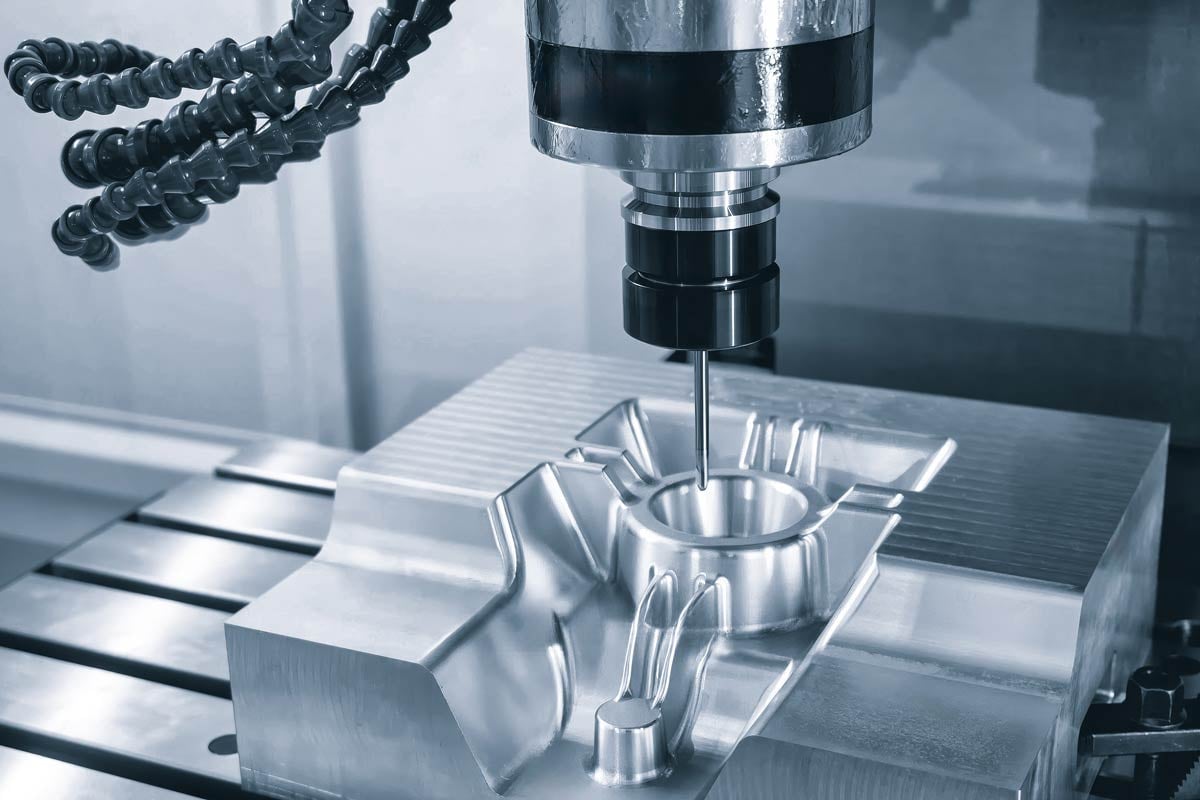
The adoption of 5-axis machining is accelerating, driven by increasing part complexity and the need for higher quality. In 2026, 5-axis is no longer a niche capability but a competitive necessity for production work where geometry warrants it. By reducing the number of setups, manufacturers can significantly improve repeatability, shorten lead times, and reduce inspection complexity. This is particularly critical for EV components, aerospace structures, and medical implants, where tolerance bands are becoming exceptionally tight. Multitasking lathes and machining centers are further enabling the completion of complex parts in a single operation, boosting throughput and accuracy.
Once a buzzword for basic simulation, the digital twin has evolved into a "living ecosystem" that mirrors the entire machining process. In 2026, these models integrate design, process engineering, machining, and inspection into a continuously updated thread. Virtual commissioning and clash detection are now standard practice, allowing manufacturers to eliminate setup errors long before the first chip is cut. By modeling thermal drift and spindle dynamics, digital twins help trim ramp-up times dramatically—by as much as 40% in some advanced implementations. The true power lies in the feedback loop, where real machining data continuously refines the simulation, making each cycle smarter than the last.
The convergence of additive and subtractive processes—hybrid manufacturing—is moving out of the lab and onto production floors. A single platform that combines metal deposition with CNC cutting is gaining traction in aerospace, energy, and maintenance/repair operations. This approach solves two long-standing challenges: reducing material waste by building near-net shapes, and enabling complex internal geometries like conformal cooling channels that are impossible to cut conventionally. Shops that master these hybrid workflows are securing a competitive edge in producing lighter, more efficient components.
Robotics and automation in 2026 are not just about tending the machine tool; they are permeating surrounding processes. Shops are now automating tasks like pressure testing, washing, drying, and inspection. This "support-process automation" standardizes previously manual workflows, reducing queue time and quality risk. The goal is to create fully networked cells where IoT sensors stream real-time data to edge servers, with some facilities reporting scrap rate reductions of up to 30%. This wave of automation is as much about amplifying skilled labor as it is about replacing it, allowing one technician to oversee multiple machines and focus on exceptions rather than repetitive tasks.
Underpinning all these technological shifts is a powerful macro-trend: reshoring. Geopolitical risks and logistics disruptions are driving production back to home markets, particularly in the US and Europe. To offset higher labor costs in these regions, manufacturers are doubling down on the very technologies mentioned above—automation, AI, and advanced machine tools.
Simultaneously, sustainability has emerged as a core operational metric. Environmental performance is now tied directly to efficiency, with shops adopting Minimum Quantity Lubrication (MQL), coolant recycling, and energy-efficient machine designs. Customers are increasingly asking for carbon-footprint data per part, pushing shops to measure energy use and material waste with the same precision as dimensional tolerances.
In conclusion, the CNC machining landscape of 2026 is one of integrated intelligence. The factories that thrive will be those that treat every machine cycle as a data event—captured, analyzed, and used to improve the next. The line between programming and production is blurring, and the pursuit of perfection is now powered by data, algorithms, and a resilient workforce.




 English
 简体中文
简体中文